

Why the Best Lens for Fujifilm Everyday Carry Might Not Be the Most Perfect One
Every photographer eventually walks right into the sharpness trap. You spend your evenings checking test charts, zooming into 400 percent crops of brick walls, and convincing yourself that edge resolution is the most critical metric in photography. You assume that buying an optically pristine piece of glass will immediately make your work stand out.
Then normal life gets in the way. That heavy, razor-sharp prime lens stays on a shelf in your bedroom. It feels way too big to take to dinner with your family. It draws unwanted attention on the subway, and it turns your shoulder sore after an hour of walking around town. Before long, you simply stop taking your camera with you.
The plain reality is that the best lens for Fujifilm everyday carry is almost never the one that wins laboratory test awards. It is the lens that actually makes you want to bring your camera out into the world. Photography has always been about showing up. A slightly imperfect, tiny lens sitting in your hands will capture real moments, while a technically flawless piece of glass sitting on a desk takes zero photos.
Photographer and creator How I See The Rolling World explored this exact idea while traveling, showing how an unexpected, budget-friendly little pancake lens became an indispensable daily favorite. You can watch his detailed field test, street samples, and side-by-side comparison in the video below:
The Sharpness Trap: Laboratory Charts vs Real Life
Camera brands have gotten very good at making lenses that look flawless in software tests. Modern primes come with complex lens elements that remove every trace of chromatic aberration, color fringing, and corner darkening. Built-in camera profiles automatically stretch out barrel distortion before you even look at your raw files on a computer monitor.
Yet many of these modern files look completely sterile. They lack warmth, quirks, and personality. In photography communities, people talk constantly about character. Character usually means organic imperfections: natural darkening in the corners that frames a portrait, gentle falloff, and subtle softness that makes a portrait feel human rather than like a technical scan.
More importantly, perfection adds physical weight. Flawless glass needs big elements, heavy barrels, and bulky filter rings. That extra size transforms your camera from an everyday companion into a project you only pick up when you have planned a dedicated photo walk. For an everyday carry setup, your goal is the exact opposite. You want something so light, compact, and quick to use that grabbing it on your way out the door requires no second thought.
Meet the Underdog: SG-image 25mm f1.8 Autofocus
Fujifilm shooters looking for a true autofocus pancake lens have had limited options for a long time. Most choices either cost a small fortune or limit you to a slow f2.8 aperture that struggles once the sun sets. That is why the SG-image 25mm f1.8 autofocus lens caught so many people off guard.

This little lens combines several practical features that street shooters and casual travelers have been wanting for years:
- True pancake profile: It barely sticks out past the camera grip, keeping the whole camera body flat and compact.
- Bright f1.8 maximum aperture: Unlike standard f2.8 pancake lenses, this lens lets in more than a stop and a half of extra light, making night walks and indoor meals easy to capture without blurry motion.
- Functional autofocus: While it is not designed for fast sports tracking, the autofocus is reliable and responsive for street snapshots, portraits, and travel moments.
- Solid metal build: The lens body, the screw-on square lens hood, and the front cover are all metal, giving it a classic mechanical feel.
- Built-in USB-C port: You can update the lens firmware straight through a small port on the mount, keeping it compatible with newer camera bodies.
- Natural 25mm focal length: On an APS-C sensor, 25mm gives you about a 37.5mm full-frame perspective, which sits right in the classic sweet spot between 35mm and 40mm.
When you mount this silver lens onto a body like the Fujifilm X-T5 in silver, the visual match is remarkable. The silver shade blends into the top plate of the camera, turning a modern 40-megapixel powerhouse into something that looks like an old analog rangefinder.
The Magic of the Everyday Carry Footprint
Portability changes how you behave. When an outfit requires a dedicated camera bag with thick dividers, you hesitate before grabbing it. A dedicated camera bag also broadcasts to everyone on the street that you are carrying expensive technology.
A smart setup fits inside a simple neoprene wrap sleeve. A soft pouch protects your body and lens from keys, pens, and loose items inside whatever everyday bag you already carry, such as a simple canvas tote, a small backpack, or a shoulder pouch. People around you see a simple case, but you know you have a high-grade camera ready to shoot at any second.
Standard f1.4 and f2 lenses make this kind of carry difficult. Because the barrels stick out several inches, they stretch neoprene cases out of shape and take up too much vertical space. With a flat lens like the SG-image 25mm, the entire camera slides in and out without snagging. You pull the camera out, power it on, grab the image, and slide it back into your bag in five seconds. That speed is what makes this setup a serious contender for the best lens for Fujifilm everyday carry.
[Internal Link: Suggestion for an internal link related to compact street photography bags and daily travel packing setups]
Comparing Popular Compact Primes for Fujifilm
To see how the SG-image 25mm fits into the wider ecosystem, it helps to look at the alternative lenses most Fujifilm shooters consider when building a compact kit.
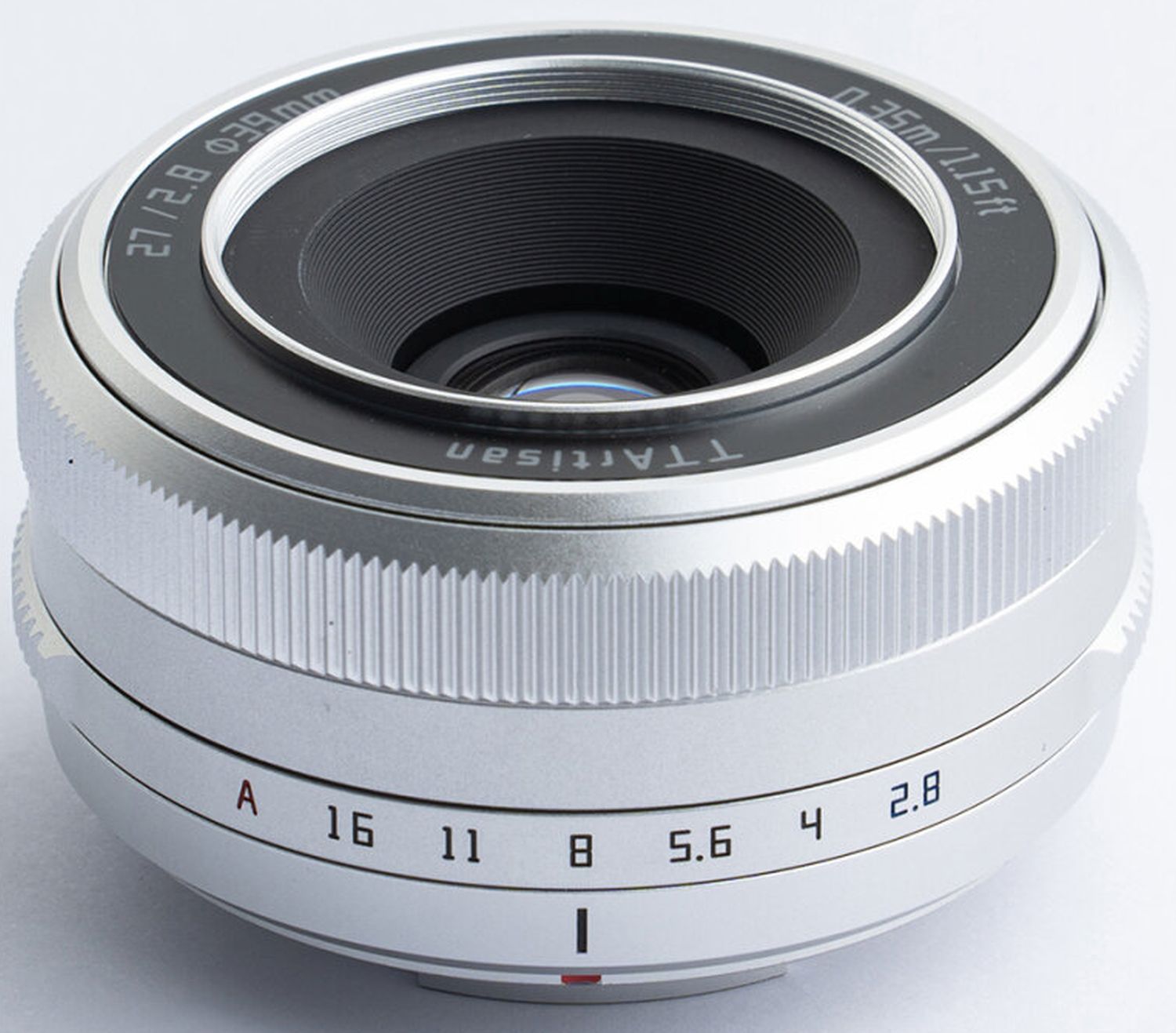
1. TTArtisan 27mm f2.8 Autofocus
The TTArtisan 27mm f2.8 pancake lens is one of the most widely bought budget pancakes on the market. It includes an aperture ring and sits very flat on the body. However, its maximum aperture is limited to f2.8. In dim cafes, evening streets, or airport waiting areas, f2.8 forces your camera into noisy ISO settings. Furthermore, 27mm works out to roughly 41mm in full-frame terms, which many street photographers find slightly too narrow for tight indoor scenes.
2. Fujinon XF 27mm f2.8 R WR
If you want original manufacturer gear with weather resistance, the Fujinon XF 27mm f2.8 R WR is a well-known benchmark. It has snappy autofocus, clean optics, and solid build quality. But it still carries an f2.8 aperture limit and comes at a significantly higher price point. If your budget is tight or you need the low-light benefit of f1.8, the trade-off is clear.
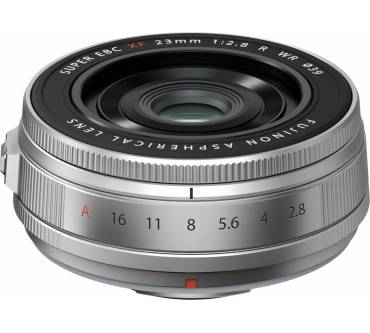
3. Fujinon XF 23mm f2 R WR
Fujifilm also makes the widely praised Fujinon XF 23mm f2 lens. The 23mm perspective is great for environmental shots, the autofocus is near-instant, and it handles rough weather easily. However, its stepped, cone-shaped barrel design makes it substantially longer than a flat pancake. It fills up small pouches quickly and stops your camera from being truly pocketable.
4. Viltrox 25mm f1.7
If optical quality per dollar is your only criterion, the Viltrox 25mm f1.7 lens is hard to beat. It is sharp, well-corrected, and produces clean images right across the frame. But when you place it next to the SG-image 25mm, the difference in physical length is unmistakable.

As you can see, the Viltrox is nearly twice the length of the SG-image lens. It is a compact prime by general photography standards, but it is definitely not a pancake lens. That physical size difference changes how you carry your camera every single day.
[External Link: Suggestion for an authoritative link to an optical testing resource or sensor crop factor guide]
Optical Reality Check: Flaws, Sharpness, and Character
Let us look honestly at the optical results. When you compare the SG-image 25mm f1.8 directly to a sharp modern lens like the Viltrox 25mm in real test frames, the compromises of the pancake design show up right away:

- Vignetting at wide apertures: At f1.8, the corners show clear darkening. Stopping down to f2.8 cleans up most of the light loss, but wide open, the vignette is noticeable.
- Barrel distortion: Straight lines along the edges of your composition show a mild curve. For natural landscapes and street portraits, you rarely notice this, but if you photograph brick walls or strict architectural lines, you will need to apply correction software.
- Soft corner resolution: While center sharpness is crisp and usable right from f1.8, the corners lose contrast and fine detail. On modern 40MP sensors like the one in the X-T5, the corners look soft when you zoom all the way in.
Do these optical flaws ruin real photographs? In real-world shooting, almost never. When you make photos on the street or travel through a busy market, your main subject sits near the center or middle third of the frame. The softer corners blend into normal depth-of-field blur, and the dark vignette acts as a natural frame that pulls your eyes straight to the subject.
What about the lack of an aperture ring? While classic Fuji fans enjoy physical clicked rings on their lenses, using the camera front dial to set your aperture is fast, natural, and familiar to anyone who has used modern mirrorless bodies. It is a tiny adjustment that allows the lens barrel to remain as small as possible.
The Creative Discipline of One Single Prime Lens
Traveling with just one fixed prime lens changes how your brain works. When you carry a big zoom lens that covers 16mm to 80mm, you waste time twisting the zoom barrel back and forth, second-guessing your composition, and wondering if you picked the right focal length.
When you commit to a single 25mm lens, your creative process becomes clearer:
- You understand the frame before raising the camera: Within an afternoon of shooting, your eyes automatically learn what will fit inside the frame before you touch the shutter button.
- You move your feet: You step closer to interact with people or step back to include more background. That physical movement helps you discover interesting angles you would have skipped with a zoom.
- You learn to let go of unreachable shots: You accept that you cannot photograph a distant bird or a tiny architectural detail two blocks down the road. Letting go of those shots frees up your mind to focus on the human interactions happening around you.
Whether you are documenting volcanic trails across Lanzarote, watching people while waiting for an early morning airport coffee, or taking casual night pictures with a tiny manual flash, a compact prime turns your camera into a tool you actually use instead of a heavy weight on your shoulder.
[Internal Link: Suggestion for an internal link related to street photography composition and single prime exercises]
Evaluating Lenses: Shot Taken vs Shot Missed
Most gear reviews evaluate gear by asking: "Which piece of glass gives you the highest technical score on a computer test?"
A much more useful test for everyday photographers is simply: Shot Taken vs Shot Missed.
If a lens is technically perfect but stays inside a closet because it feels annoying to carry, every photo you could have captured with it is gone. If an inexpensive, slightly flawed pancake lens lives inside your small bag every single day, ready to be pulled out whenever interesting light catches your eye, it will give you hundreds of photos that preserve real memories.
For street walks, weekend trips, and casual daily carry, the SG-image 25mm f1.8 strikes a practical balance between aperture speed, compact dimensions, and retro style. It is not the most perfect piece of glass on the market, but mounted on an agile body like the Fujifilm X-T5, it might be the setup that makes you love carrying your camera everywhere you go.
Do you prefer extreme edge-to-edge sharpness in your everyday setup, or do you value small size and unique optical character? Let us know what you carry in your daily bag in the comments below.
